The signs of PCOS that get called normal
PCOS can hide inside symptoms people are taught to tolerate. Here is how to recognize a pattern, what diagnostic criteria actually require, and what to ask a clinician to evaluate.
By Faria Kabir · Published August 2026 · 7 min read
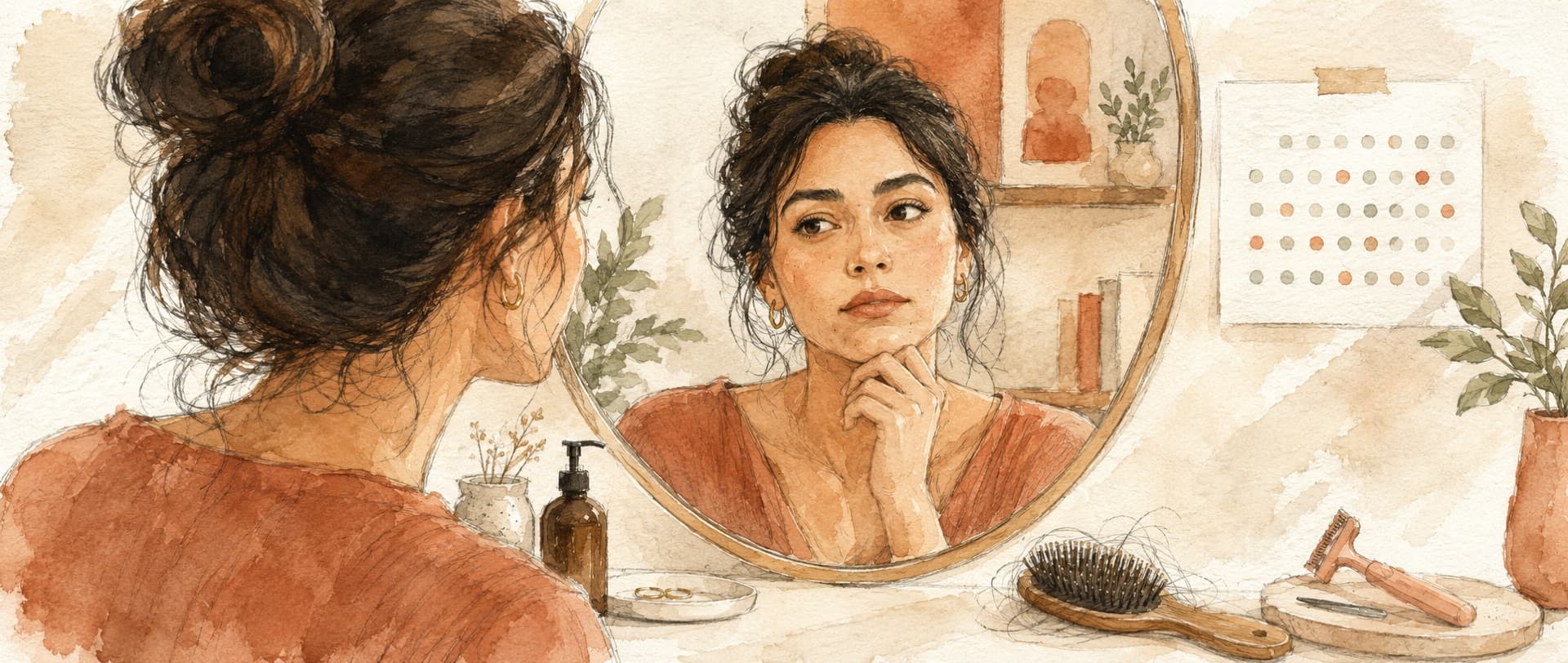
A late period gets blamed on stress. Persistent acne becomes a skin problem. Chin hair becomes cosmetic. Difficulty losing weight becomes a question of discipline. Any one of these experiences may have many causes, but when several appear together, calling them “normal” can delay a polycystic ovary syndrome workup for years.
PCOS is common, but it is still commonly missed
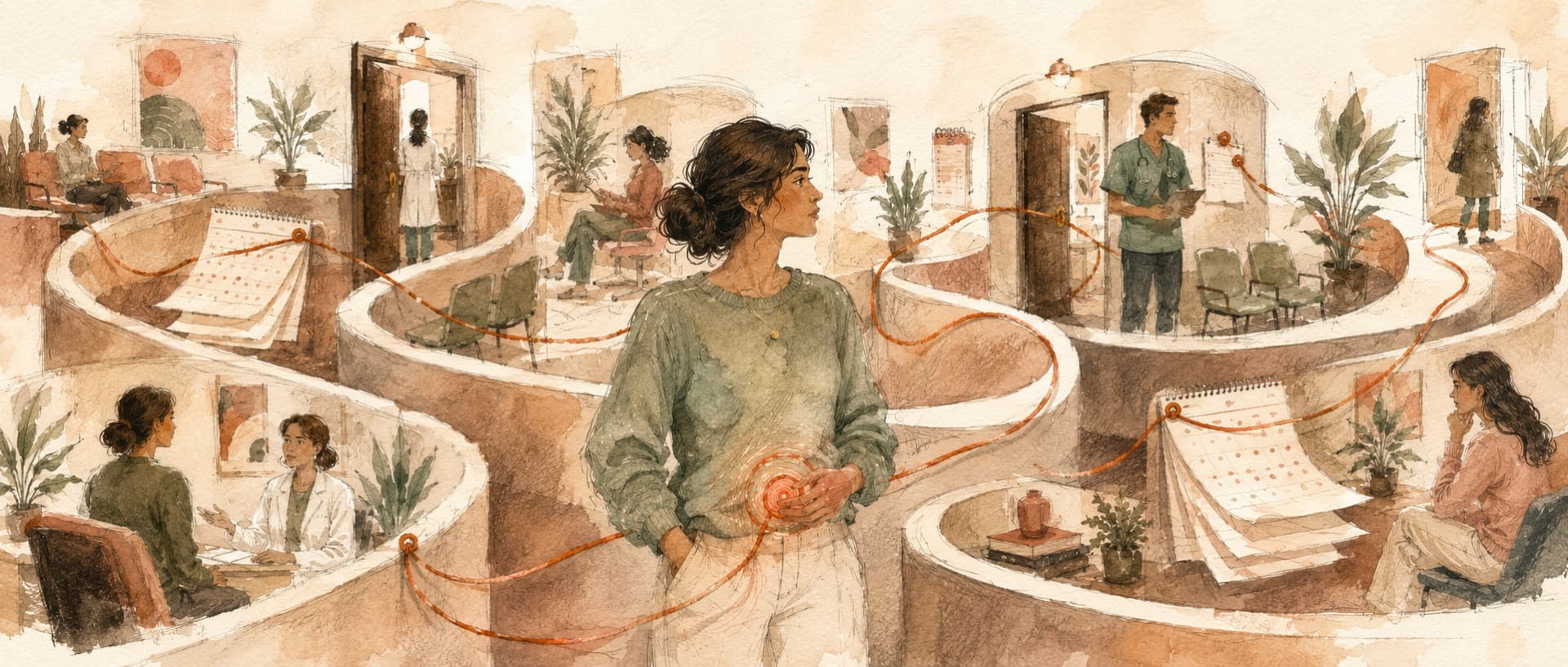
PCOS, now also called PMOS, is a chronic reproductive, hormonal, and metabolic condition. The World Health Organization estimates that 10% to 13% of reproductive-age women are affected and that as many as 70% may not know they have it. That gap does not mean every irregular cycle or acne flare is PCOS. It means clinicians and patients need to look for a pattern instead of evaluating every symptom in isolation.
Patient research helps explain why the pattern is missed. A large international survey linked delayed diagnosis and inadequate information with dissatisfaction in care. A newer 2025 qualitative study in F&S Reports found that participants often described symptom dismissal, an excessive focus on weight or fertility, and the need to self-advocate or turn to social media for answers. These are not diagnostic findings, but they show how easily a multi-system condition can be fragmented into separate complaints.
1. Periods that are “just irregular”
Menstrual cycles do not have to arrive on the same calendar date every month. Still, repeatedly going more than 35 days between periods, having fewer than about eight cycles in a year, skipping periods for months, or experiencing unpredictable bleeding deserves evaluation. PCOS can disrupt ovulation, so a bleed may occur without a consistently ovulatory cycle. Long gaps between periods also matter beyond fertility because the uterine lining may be exposed to prolonged estrogen without regular progesterone.
The 2023 international evidence-based PCOS guideline gives cycle definitions that change with time since the first menstrual period. That distinction is crucial in adolescents: irregular cycles can be expected soon after menarche, and overdiagnosing a teenager can be harmful. Persistent cycle irregularity plus clinical or biochemical hyperandrogenism is more meaningful than one unusual month.
2. Acne that never really behaves like ordinary acne
Acne is common, especially in adolescence and around menstruation. PCOS-related acne is more concerning when it is persistent, difficult to control, concentrated along the jawline or lower face, or accompanied by irregular periods, unwanted facial hair, or scalp hair thinning. Acne alone cannot diagnose PCOS, but it can be a visible clue to androgen excess.
In a 2026 Yale Medicine interview, reproductive endocrinologist Lubna Pal, MBBS, MS, distinguishes chronic persistent acne from ordinary adolescent or premenstrual acne and emphasizes that PCOS is not a one-test diagnosis. Rapidly worsening acne or other signs of androgen excess may require evaluation for causes other than PCOS.
3. Facial or body hair treated as only cosmetic
Coarse hair on the chin, upper lip, chest, abdomen, back, or inner thighs can reflect hirsutism, a clinical sign of androgen excess. Hair patterns differ by family background and ethnicity, so the relevant question is not whether someone meets a narrow beauty standard. It is whether the growth is new, increasing, distressing, or appearing alongside cycle changes, acne, or fertility problems.
Unwanted hair can be minimized because it is visible but not immediately dangerous. Yet the current international guideline states that self-reported unwanted excess hair should be taken seriously even when a clinician sees limited growth during the appointment. Hair removal can obscure the clinical picture; patients should be able to describe what they manage between visits without needing to stop treatment to “prove” it.
4. Scalp hair thinning blamed on stress
Female-pattern hair loss can appear as widening at the center part, reduced density at the crown, or more scalp visibility without a receding hairline. PCOS is one possible cause, but thyroid disease, iron deficiency, recent illness, major stress, restrictive eating, postpartum changes, and medications can also contribute. Hair loss is therefore a reason for a broader evaluation, not a shortcut to a PCOS label.
5. Weight changes, insulin resistance, and metabolic signs
Some people with PCOS gain weight easily or find weight loss unusually difficult. Others have PCOS at a lower body weight. Weight is neither required for diagnosis nor a reliable measure of symptom severity. Focusing only on body size can miss “lean PCOS,” while telling every higher-weight patient that weight is the entire problem can delay assessment of ovulation, androgen excess, glucose regulation, cholesterol, blood pressure, sleep, and mental health.
Acanthosis nigricans (darker, thicker, velvety skin that often appears on the neck, underarms, or groin) and multiple skin tags can be associated with insulin resistance. Fatigue, hunger, or cravings are much less specific. They may justify a conversation about glucose and metabolic health, but they are not standalone PCOS symptoms and should not be used to self-diagnose insulin resistance.
The WHO PCOS fact sheet and FDA patient guidance describe elevated risks that can include type 2 diabetes, high cholesterol, high blood pressure, sleep apnea, and pregnancy complications. That is why a complete PCOS visit should not end with “come back when you want to get pregnant.”
6. Difficulty conceiving, even with “regular enough” periods
PCOS is a leading cause of ovulatory infertility, but not every person with PCOS is infertile and not every apparently regular cycle guarantees ovulation. If pregnancy has not occurred after 12 months of regular unprotected intercourse when under 35, after six months at 35 or older, or sooner when cycles are irregular or another risk factor is present, a fertility evaluation is appropriate. The evaluation should include both partners rather than assuming PCOS explains everything.
What actually counts as a PCOS diagnosis?
In adults, the international guideline continues to use a two-of-three framework after other causes are excluded:
- Ovulatory dysfunction: irregular, infrequent, or absent ovulation, often reflected in irregular cycles.
- Hyperandrogenism: clinical signs such as hirsutism or biochemical evidence on appropriately measured androgen tests.
- Polycystic ovarian morphology: an ultrasound pattern, or in some adults an elevated anti-Mullerian hormone (AMH) level used within the guideline algorithm, not as a standalone test.
If a patient already has both ovulatory dysfunction and hyperandrogenism, ultrasound or AMH is not required to make the diagnosis. The reverse is also important: polycystic-appearing ovaries are common and do not equal PCOS by themselves. “Cysts” are not required, which is one reason the 2026 name change to PMOS matters.
Adolescents require a more cautious approach. Ultrasound and AMH should not be used to diagnose PCOS during adolescence because normal pubertal ovaries and hormones can resemble the adult syndrome. Persistent irregular cycles and hyperandrogenism, interpreted in relation to years since menarche, are central.
What should a PCOS workup consider?
PCOS is a diagnosis of inclusion and exclusion: the clinician identifies the PCOS pattern while checking for other explanations. The exact workup depends on age, medications, cycle history, pregnancy possibility, and symptoms. It may include:
- A detailed menstrual, pregnancy, medication, family, weight, sleep, and mental health history.
- Evaluation for clinical hyperandrogenism and, when appropriate, high-quality total and free testosterone testing.
- Testing selected to exclude pregnancy, thyroid dysfunction, hyperprolactinemia, and nonclassic congenital adrenal hyperplasia; other testing when symptoms suggest Cushing syndrome or an androgen-secreting tumor.
- Glucose assessment, blood pressure, and a lipid profile because metabolic risk can occur across body sizes.
- Ultrasound or AMH only when it adds information under the adult diagnostic algorithm, not because every patient needs every test.
How to make an appointment more useful
Bring dates or screenshots showing cycle length over at least several months, a list of medications and supplements, prior hormone and metabolic labs, and a short timeline of when acne, hair growth, hair loss, weight changes, or fertility concerns began. If you remove facial hair, note the method and frequency. If your primary concern is not pregnancy, say that directly: PCOS care should address symptoms and long-term health, not only fertility.
A useful opening question is: “Could these symptoms represent ovulatory dysfunction and androgen excess, and what conditions should we rule out before deciding whether this is PCOS?” That frames the visit around the diagnostic pattern instead of asking a clinician to confirm a label prematurely.
Frequently asked questions about PCOS symptoms
Can I have PCOS if my periods are regular?
Yes. Some people meet the other diagnostic features, and some people with cycles that appear regular may not ovulate consistently. But regular cycles make the history more nuanced, so a clinician should evaluate the full pattern rather than assume PCOS from acne or an ultrasound alone.
Can I have PCOS without ovarian cysts?
Yes. Polycystic ovaries are one of three possible diagnostic features, and only two are required after other conditions are excluded. The ovarian findings are follicles, not the same as a single pathologic ovarian cyst.
Does PCOS always cause weight gain?
No. PCOS occurs across body sizes. Metabolic screening and symptom care should not be withheld from a lower-weight patient, and a higher-weight patient should not be reduced to a weight-loss recommendation.
Is painful menstruation a classic PCOS symptom?
Pain can coexist with PCOS, but severe period pain is not one of the core diagnostic criteria. Debilitating pain, pain with sex, bowel or bladder symptoms that worsen around menstruation, or persistent pelvic pain should prompt evaluation for other conditions, including endometriosis, adenomyosis, fibroids, or ovarian pathology.
Medical note. This article is for education and cannot diagnose a condition or replace care from a licensed clinician. Seek urgent care for severe or rapidly worsening symptoms, fainting, very heavy bleeding, acute pelvic pain, or any symptom that feels dangerous.
Sources and further reading
- 2023 International Evidence-based Guideline for the Assessment and Management of PCOS/PMOS. ASRM-hosted clinical guideline covering diagnosis, metabolic health, mental health, and management.
- Polycystic ovary syndrome: WHO fact sheet. Global prevalence, symptoms, diagnosis, and long-term risks; updated January 2026.
- PCOS is Now PMOS: Understanding the Name Change. ASRM explanation of the 2026 terminology change.
- Gaps and opportunities in polycystic ovary syndrome care. 2025 F&S Reports qualitative study on dismissal, care priorities, and self-advocacy.
- Delayed Diagnosis and a Lack of Information Associated With Dissatisfaction in Women With PCOS. Large international study of diagnostic experiences.
- Current Guidelines for Diagnosing PCOS. 2023 peer-reviewed review of diagnostic criteria and testing limitations.
- Polycystic Ovary Syndrome: Why Symptoms Matter More Than a Label. Interview with Yale reproductive endocrinologist Lubna Pal, updated 2026.
- Polycystic Ovary Syndrome FAQ. ACOG patient guidance.
- Polycystic Ovary Syndrome. FDA Office of Women’s Health patient resource updated in 2026.
- Screening and Management of the Hyperandrogenic Adolescent. ACOG guidance on the overlap between puberty and PCOS-like symptoms.
- “I felt like she did not take me seriously”: patient experiences with PCOS. 2022 mixed-methods study of diagnosis and care experiences.